What if a casino game designed around randomness were influenced by imperfections in the equipment itself? This question lies at the center of Winning Streak (2012), also known as The Pelayos, a Spanish comedy-drama directed by Eduard Cortés.
Unlike conventional gambling movies about professional poker players or financially desperate bettors, the film draws inspiration from a real Spanish family whose investigation into roulette wheels became an extraordinary episode in European gambling history. Led by Gonzalo García-Pelayo, the family challenged conventional assumptions about casino mathematics during the early 1990s. Their experiences attracted media attention, generated disputes with casino management, and eventually became the subject of a feature film.
However, the Pelayos true story is more complicated than the cinematic fantasy of discovering a guaranteed way to win. It involves statistical observation, unusual historical circumstances, financial uncertainty, family cooperation, and a significant legal dispute.
The Family's Roulette Success
Who was Gonzalo García-Pelayo?
Before becoming internationally associated with roulette, Gonzalo García-Pelayo had established a remarkably diverse professional career. His activities included filmmaking, music production, radio broadcasting, and other cultural projects. His interest in mathematics and probability eventually led him to question whether physical roulette equipment always behaved according to its theoretical design.
Rather than assuming that previous losses made future victories inevitable, he investigated whether physical conditions could influence the distribution of outcomes. The resulting project brought together members of his family and became the foundation of their unusual public reputation.
How the family became involved in roulette
The family's activities began in the early 1990s at Casino Gran Madrid in Torrelodones, near the Spanish capital. Gonzalo's son Iván helped coordinate a group that included relatives and other associates. Unlike the solitary gamblers frequently depicted in cinema, the Pelayos approached their investigation collectively.
Their cooperation became an important feature of the historical story and subsequently provided the filmmakers with opportunities to explore contrasting personalities, family disagreements, and shared ambitions. According to reporting published by RTVE, the group began gambling in late 1991 and had accumulated approximately 70 million Spanish pesetas in winnings by the summer of 1992. These reported achievements belong to a specific historical context and should not be interpreted as typical gambling outcomes.

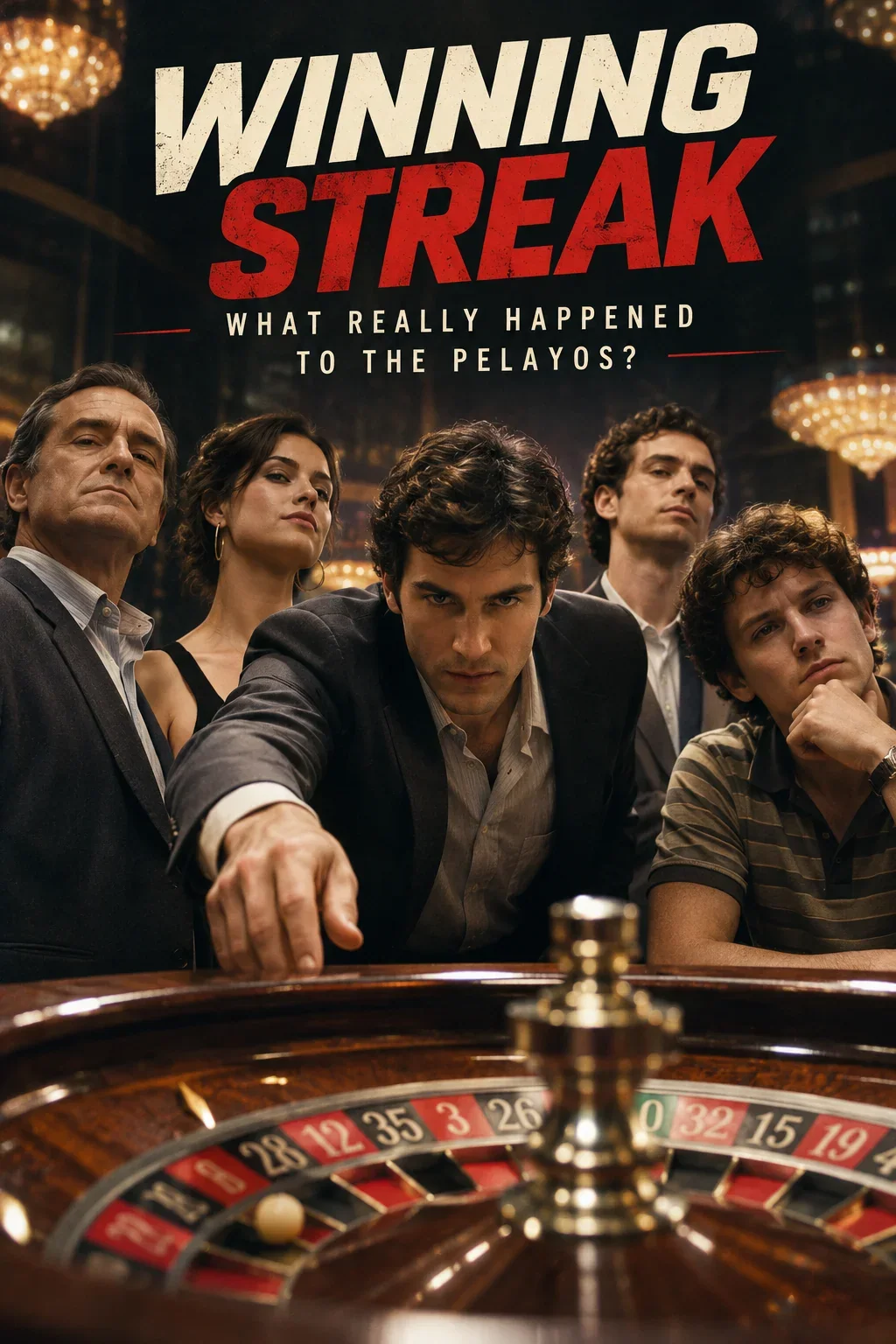
AI-generated editorial illustration; not an official film still.
What is roulette wheel bias?
In an ideal European roulette wheel, each of its 37 numbered pockets has an equal probability of receiving the ball. However, roulette wheels are physical objects. Mechanical imperfections, wear, or alignment problems can theoretically affect how they behave. This phenomenon is known as wheel bias.
The Pelayos' investigation concerned the difference between a mathematical model and the behavior of actual equipment. The existence of a theoretical physical bias does not mean that ordinary players can reliably identify or profit from one. Random variation can also produce apparent patterns, even when equipment is functioning correctly.
| Statistical investigation | Gambling superstition |
|---|---|
| Examines observable evidence | Relies on symbolic associations |
| Recognizes uncertainty | May assume predictable luck |
| Requires critical evaluation | Can reinforce existing beliefs |
| Allows hypotheses to be rejected | Often overlooks contradictory evidence |
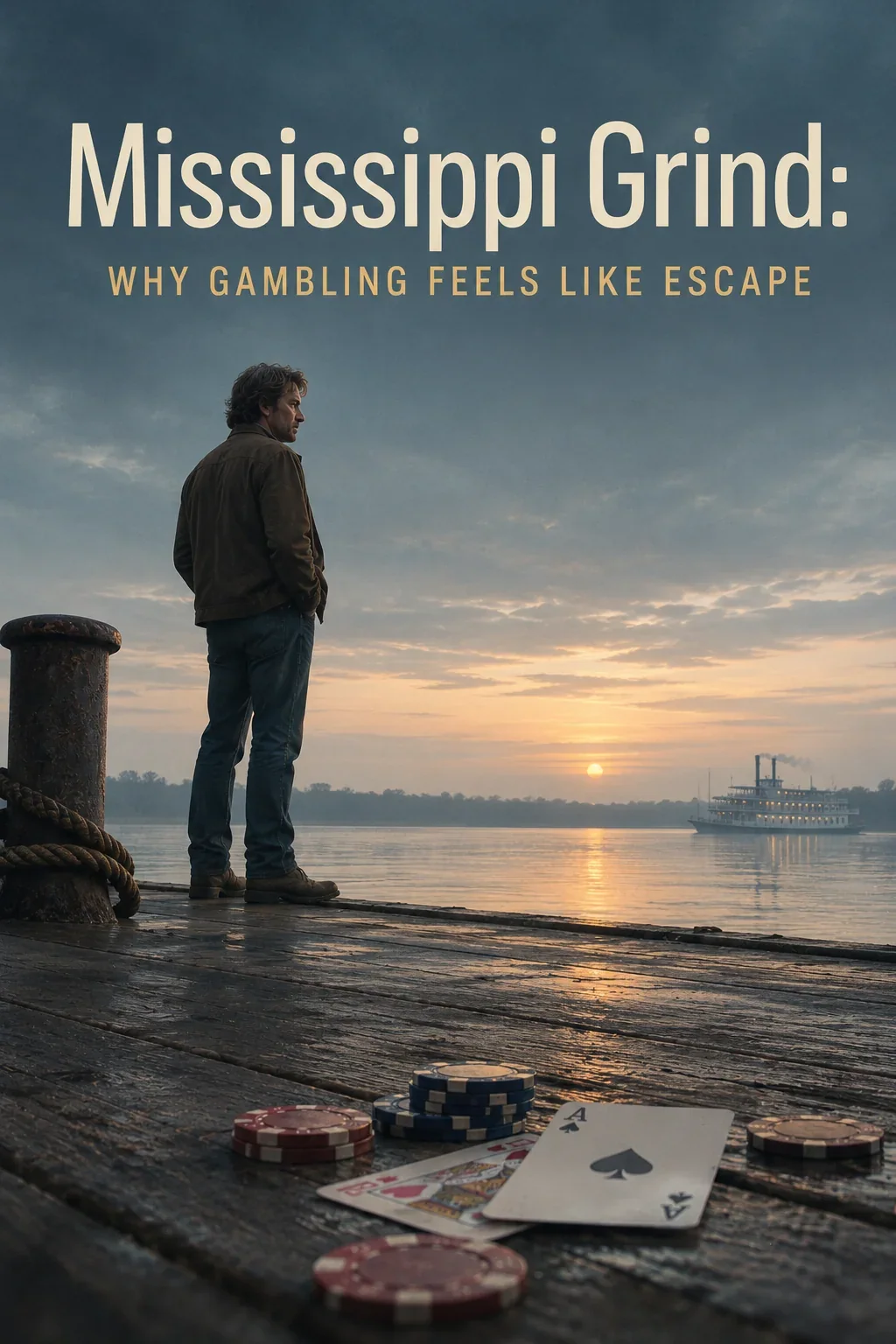
For comparison, Mississippi Grind examines characters whose belief in personal luck becomes a justification for continued gambling. Statistical knowledge alone does not eliminate financial exposure or guarantee favorable results.
How much did the Pelayos win?
Historical reporting indicates that García-Pelayo's activities generated substantial winnings. In June 2004, The Guardian reported that he had won more than one million euros during a period of approximately two years in the early 1990s. Different accounts cover different periods and locations, making it difficult to establish a single independently audited lifetime profit figure. Precise claims about their total international winnings should therefore be treated cautiously.
The casino dispute and the legal consequences
The family's success attracted the attention of casino management, leading to restrictions on their access to gambling premises. The disagreement raised a fundamental question: should identifying a physical irregularity through observation be considered equivalent to manipulating the equipment? The Pelayos maintained that their activities depended on mathematical analysis rather than physically interfering with the roulette wheels.
In June 2004, Spain's Supreme Court rejected the casino's appeal concerning the exclusion of García-Pelayo and his associates. Contemporary reporting described the judgment as recognizing the distinction between statistical ingenuity and fraudulent manipulation. The ruling concerned the specific circumstances of the dispute. It should not be interpreted as universal legal authorization for every conceivable gambling technique in every jurisdiction.
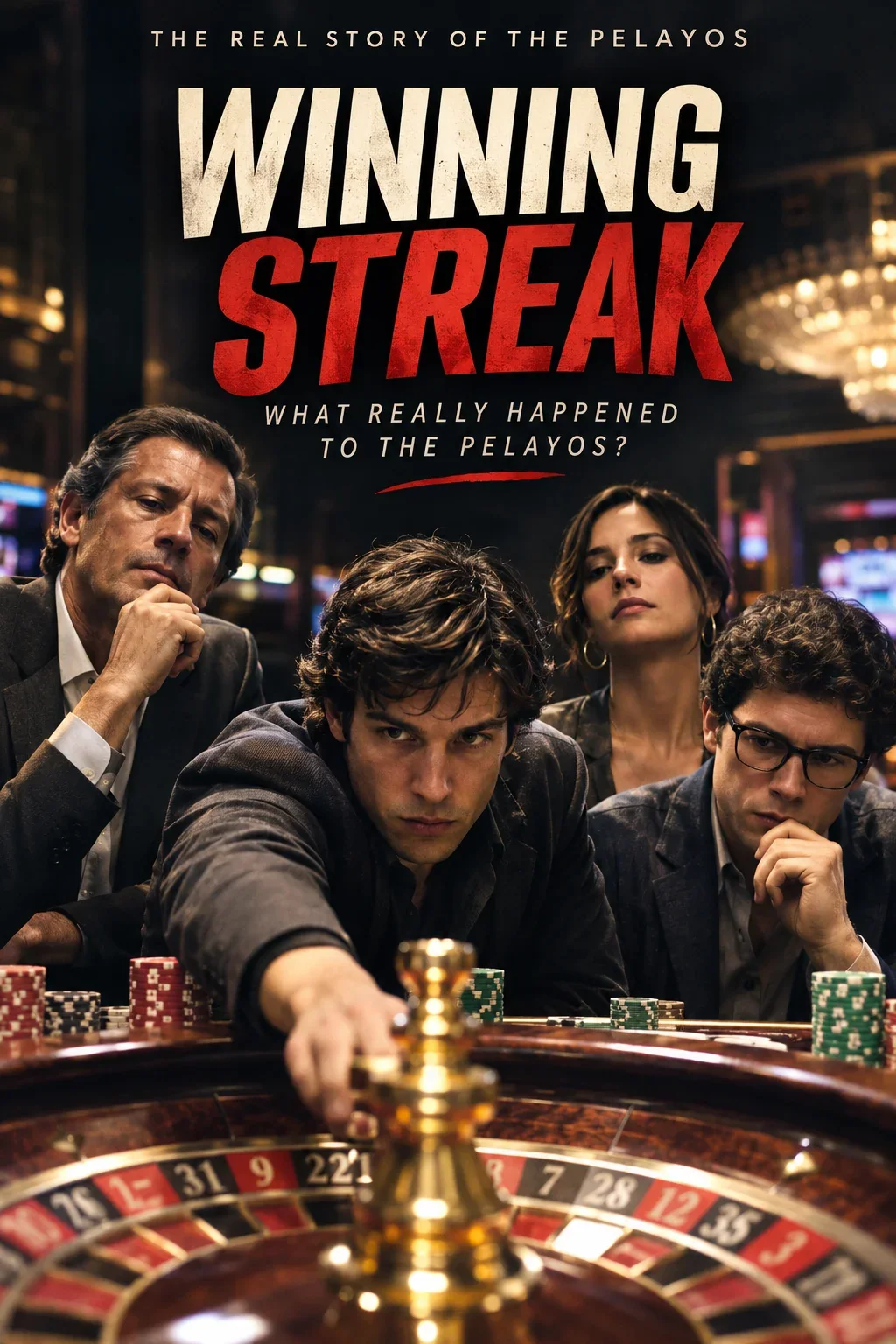
AI-generated editorial illustration; not an official film still.
| Historical event | Period |
|---|---|
| Beginning of roulette activities | 1991 |
| Substantial reported early winnings | 1992 |
| Casino exclusion and legal dispute | 1990s |
| Supreme Court decision | June 2004 |
| Release of Winning Streak | 2012 |
Facts Versus Film
How Eduard Cortés adapts the historical story
Winning Streak presents the family's experiences through the conventions of a casino caper. The filmmakers emphasize charismatic personalities, family dynamics, suspenseful confrontations, and the emotional significance of unexpected outcomes. This approach makes a complicated historical subject accessible to audiences without specialized mathematical knowledge.
However, it creates a distinction between the real investigation and its cinematic presentation. The historical activities involved extended periods of observation and analysis. A feature film necessarily compresses such processes into a more immediately engaging narrative.
The importance of family relationships
The participation of relatives and associates gives the movie an emotional foundation beyond its mathematical premise. The characters must negotiate questions of loyalty, independence, shared financial interests, and trust. Their collective ambition creates opportunities for cooperation while also introducing potential disagreements.
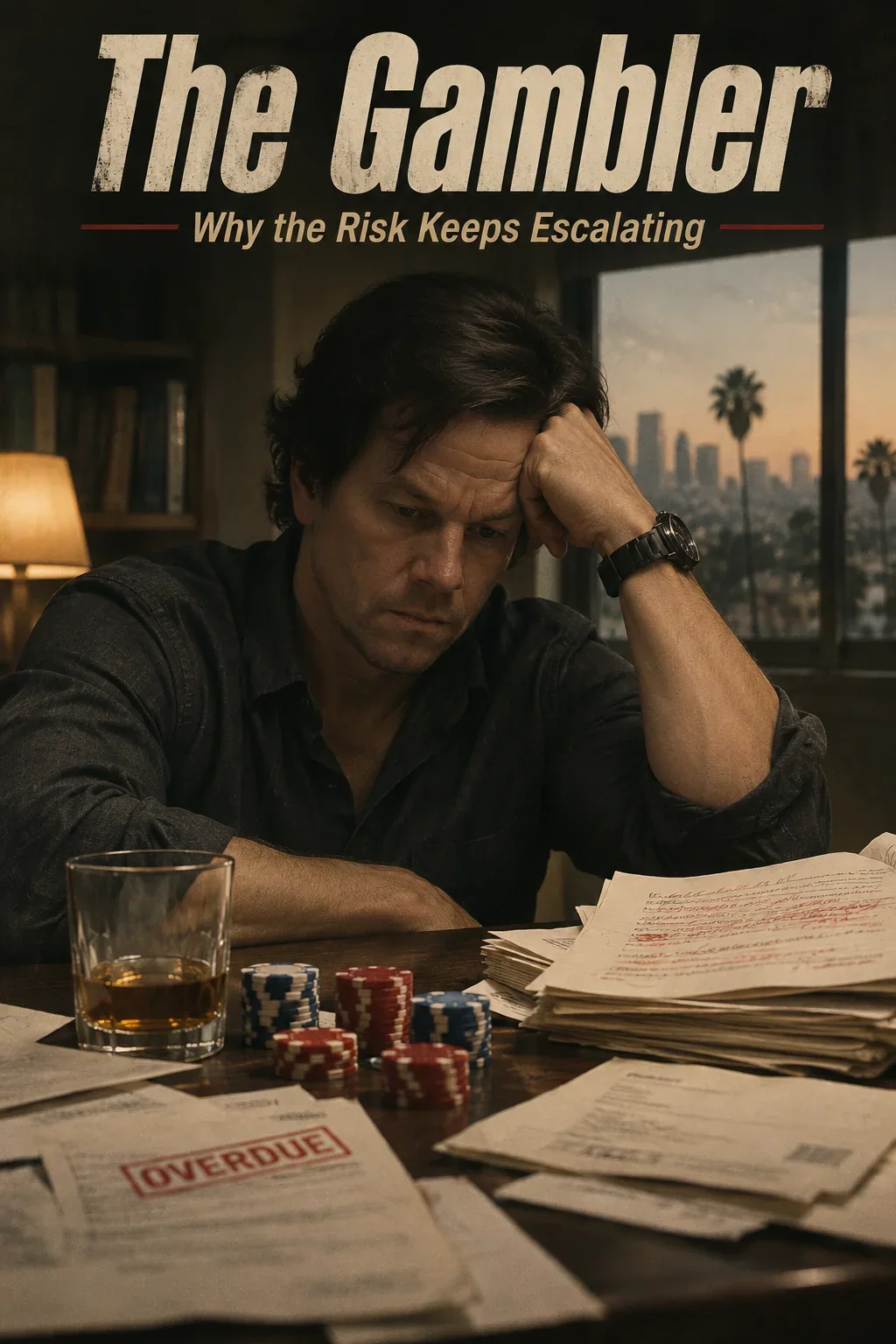
This family-centered approach distinguishes Winning Streak from movies such as The Gambler, where the protagonist's relationship with gambling is primarily associated with isolation and self-destructive behavior.
What the movie changes
The film should not be treated as a documentary reconstruction of every conversation, casino encounter, or personal conflict. Although its central premise is historically grounded, its dramatic structure reflects artistic decisions.
| Element | Historical status |
|---|---|
| Gonzalo and Iván García-Pelayo | Real participants |
| Investigation of roulette wheel imperfections | Documented |
| Significant casino winnings | Reported in contemporary media |
| Casino exclusion and litigation | Documented |
| Private dialogue | Dramatized |
| Precise sequence of confrontations | Adapted for cinema |
| Guaranteed success in ordinary roulette | Not established |
The distinction between fact and dramatization is equally important in Inside Game, which examines a real gambling-related controversy through its cinematic adaptation.
Gambling psychology in Winning Streak
The family's experiences provide an opportunity to examine the illusion of control, the tendency to overestimate one's influence over uncertain events. The historical Pelayos investigated a potentially measurable physical phenomenon. However, ordinary gambling experiences do not necessarily provide comparable evidence. A person may believe they have identified a reliable pattern when they are simply observing random variation.
Confirmation bias occurs when people favor information supporting existing beliefs while overlooking contradictory evidence. In gambling environments, this tendency can encourage individuals to remember favorable outcomes while discounting unsuccessful predictions. Scientific reasoning requires a willingness to reconsider an explanation when the evidence does not support it.
Movies naturally concentrate on unusual experiences. The Pelayos attracted public attention precisely because their reported achievements were exceptional. Focusing exclusively on successful individuals can create a misleading impression of how frequently comparable outcomes occur. Survivorship bias describes the tendency to concentrate on visible successes while overlooking unsuccessful participants. The movie's historical premise should be understood as an exceptional case rather than representative evidence about gambling profitability.
Could the Pelayos' experience be repeated today?
The family's activities took place under particular technological and commercial conditions. Modern roulette equipment, maintenance practices, monitoring systems, and regulatory environments may differ considerably from those of the early 1990s. The historical existence of biased equipment does not establish that a particular modern roulette wheel exhibits a measurable irregularity.
Standard roulette retains a mathematical house advantage. The most responsible interpretation of the Pelayos' experience concerns the relationship between theoretical probability and physical systems, rather than the expectation of guaranteed profits. For another examination of gambling businesses and legal disputes, explore Molly's Game.
Frequently asked questions
Is Winning Streak based on a true story? Yes. It draws inspiration from the García-Pelayo family's experiences.
Did the Pelayos really win money? Contemporary reporting documents substantial winnings, although exact lifetime figures vary.
Did they cheat? Their documented approach involved statistical analysis rather than physically manipulating equipment. The Spanish Supreme Court ruled in their favor in the specific casino exclusion dispute.
Does the story prove that roulette is profitable? No. It involved unusual historical circumstances and does not demonstrate that ordinary roulette offers reliable returns.
Final thoughts
Winning Streak combines family relationships with questions about mathematics, physical equipment, and institutional authority. The real García-Pelayo family's experiences demonstrate the importance of distinguishing mathematical assumptions from the behavior of physical systems. The most valuable interpretation is not that gambling guarantees financial independence. It is that evidence, probability, historical context, and uncertainty must be understood before drawing conclusions from exceptional outcomes.