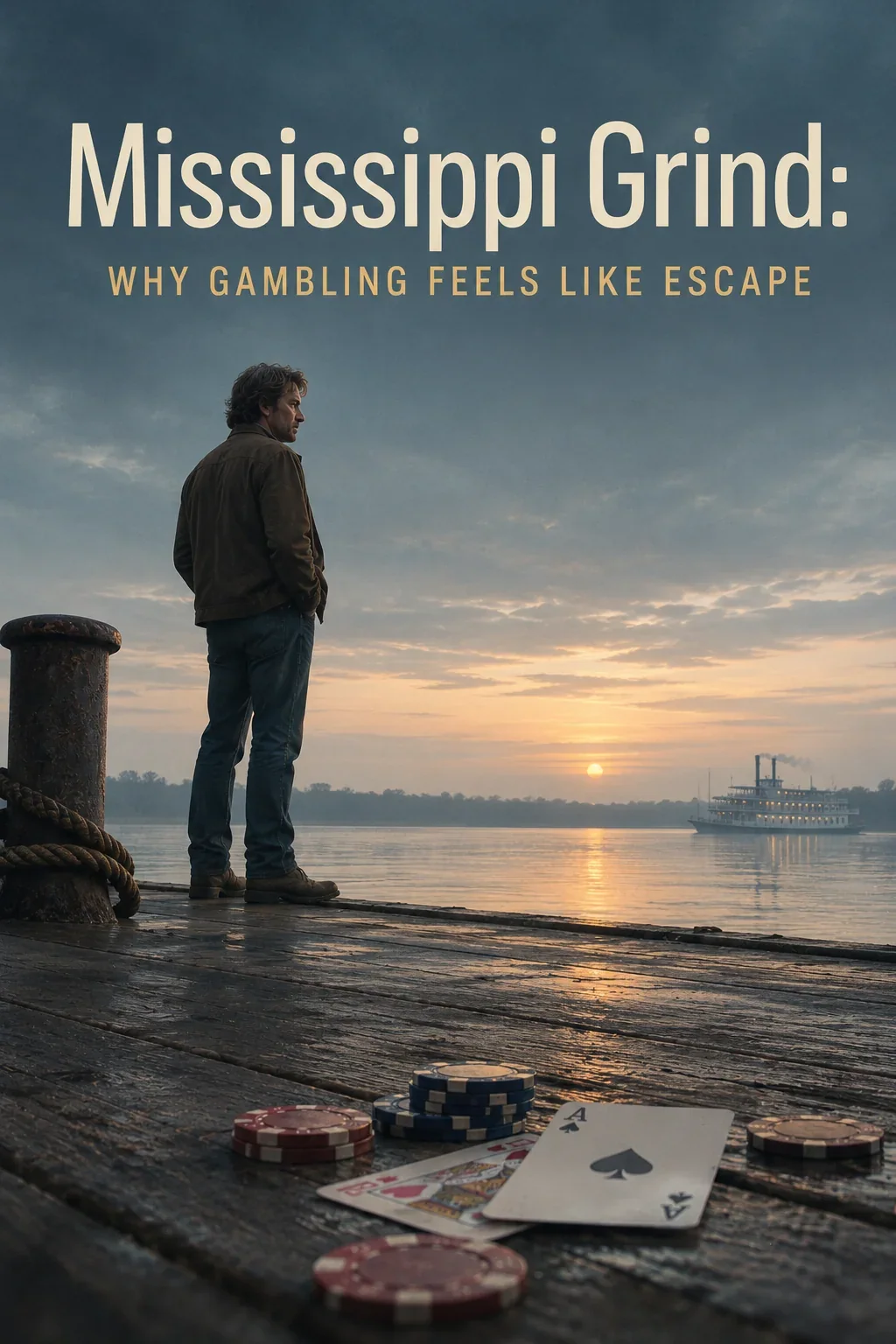
For some people, gambling is not primarily about money. It is about temporarily escaping an uncomfortable reality, imagining a different future, and believing that circumstances can change in a single extraordinary moment. Written and directed by Anna Boden and Ryan Fleck, Mississippi Grind (2015) explores this psychological experience through two gamblers traveling across the American South.
Ben Mendelsohn portrays Gerry, a financially troubled poker player whose gambling problems have damaged his relationships and undermined his stability. Ryan Reynolds plays Curtis, a charismatic traveler whose apparent confidence conceals a complicated relationship with commitment and personal responsibility. Their unexpected friendship develops into a road trip toward New Orleans, where they hope to participate in a major poker game. However, the journey is about considerably more than financial recovery. Spoilers follow.
Gambling as Escape
Gerry's life before the road trip
Gerry is already experiencing significant personal problems when the movie begins. His marriage has ended, his relationship with his daughter is distant, and financial obligations continue to accumulate. Poker provides an environment where these difficulties can temporarily disappear from his attention.
At the table, he can concentrate on immediate decisions rather than confronting the complicated circumstances of everyday life. The movie establishes a distinction between gambling as entertainment and gambling as a mechanism of emotional avoidance. For Gerry, the activity appears to serve both purposes, although its psychological function increasingly overshadows its recreational value.
Curtis and the promise of a fresh beginning
Curtis enters Gerry's life with an apparently different attitude toward gambling. He is sociable, spontaneous, and seemingly less concerned about financial outcomes. His confidence contrasts with Gerry's anxious behavior. After experiencing favorable results in Curtis's company, Gerry begins associating his new acquaintance with good fortune.
The relationship provides something that Gerry has been missing: companionship and renewed optimism. However, the foundation of that optimism is unstable. Rather than addressing his existing difficulties, Gerry interprets their friendship as an opportunity to continue gambling. Curtis becomes both a genuine companion and a psychological justification for further risk.
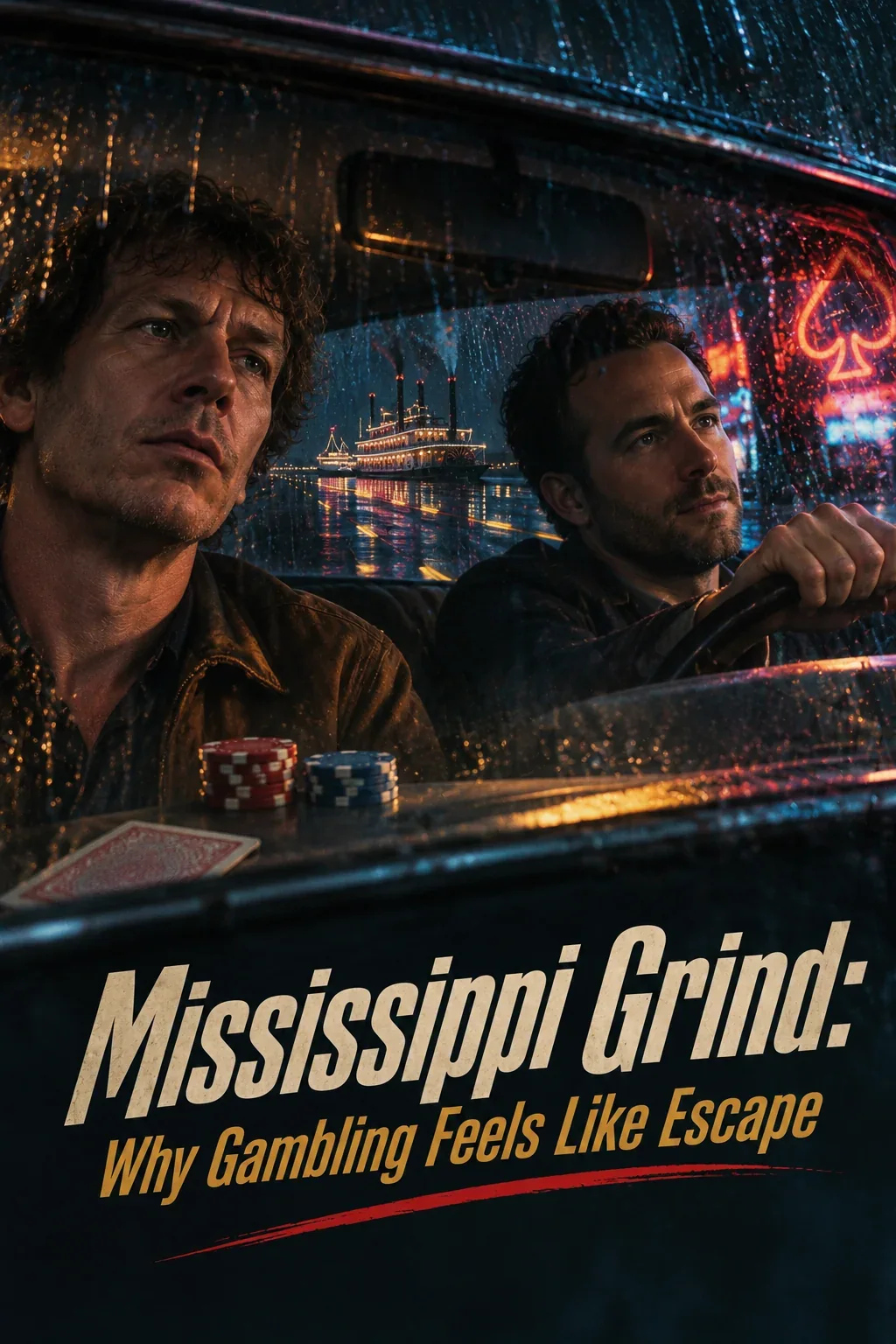
AI-generated editorial illustration; not an official film still.
Why the road trip matters
The journey toward New Orleans provides the movie with its geographical and emotional structure. The characters travel through casinos, racetracks, bars, and inexpensive accommodation, repeatedly encountering opportunities to reconsider their decisions. Each new destination creates the possibility of a fresh beginning.
For Gerry, geographical movement appears to offer an escape from financial and personal responsibilities. For Curtis, traveling is already an established part of his lifestyle. Their journey illustrates an important distinction between changing one's surroundings and changing one's behavior. Moving to another location does not necessarily resolve the circumstances that made leaving attractive.
In gambling terminology, grinding generally refers to repeated participation over an extended period. Within the movie, the expression acquires a broader significance. Gerry's life has become an exhausting repetition of temporary optimism, financial losses, and attempts to recover. The Mississippi River provides a geographical connection between the stages of this cycle. Its continuous movement contrasts with the characters' difficulty achieving meaningful personal progress.
Friendship or mutual dependence?
Gerry and Curtis develop a relationship that contains genuine affection, humor, and emotional understanding. Nevertheless, their friendship also creates circumstances in which harmful behavior becomes easier to justify. When one character expresses uncertainty, the other can provide encouragement to continue.
This dynamic demonstrates how companionship may unintentionally reinforce destructive habits. Supportive relationships are important for recovery, but their value depends partly on whether they encourage healthier behavior or normalize existing difficulties. For another interpretation of friendship and financial risk, explore Rounders.
Luck and Self-Deception
Why Gerry believes Curtis brings good luck
Gerry's belief that Curtis influences his gambling results introduces one of the movie's most recognizable psychological themes. Superstitious thinking can develop when people associate unrelated events with favorable outcomes. Because Gerry experiences positive results after meeting Curtis, he begins interpreting his companion's presence as evidence that his circumstances have changed.
However, the association does not establish causation. The movie explores how emotionally significant coincidences can become powerful personal beliefs, particularly when someone desperately wants reassurance about an uncertain future.
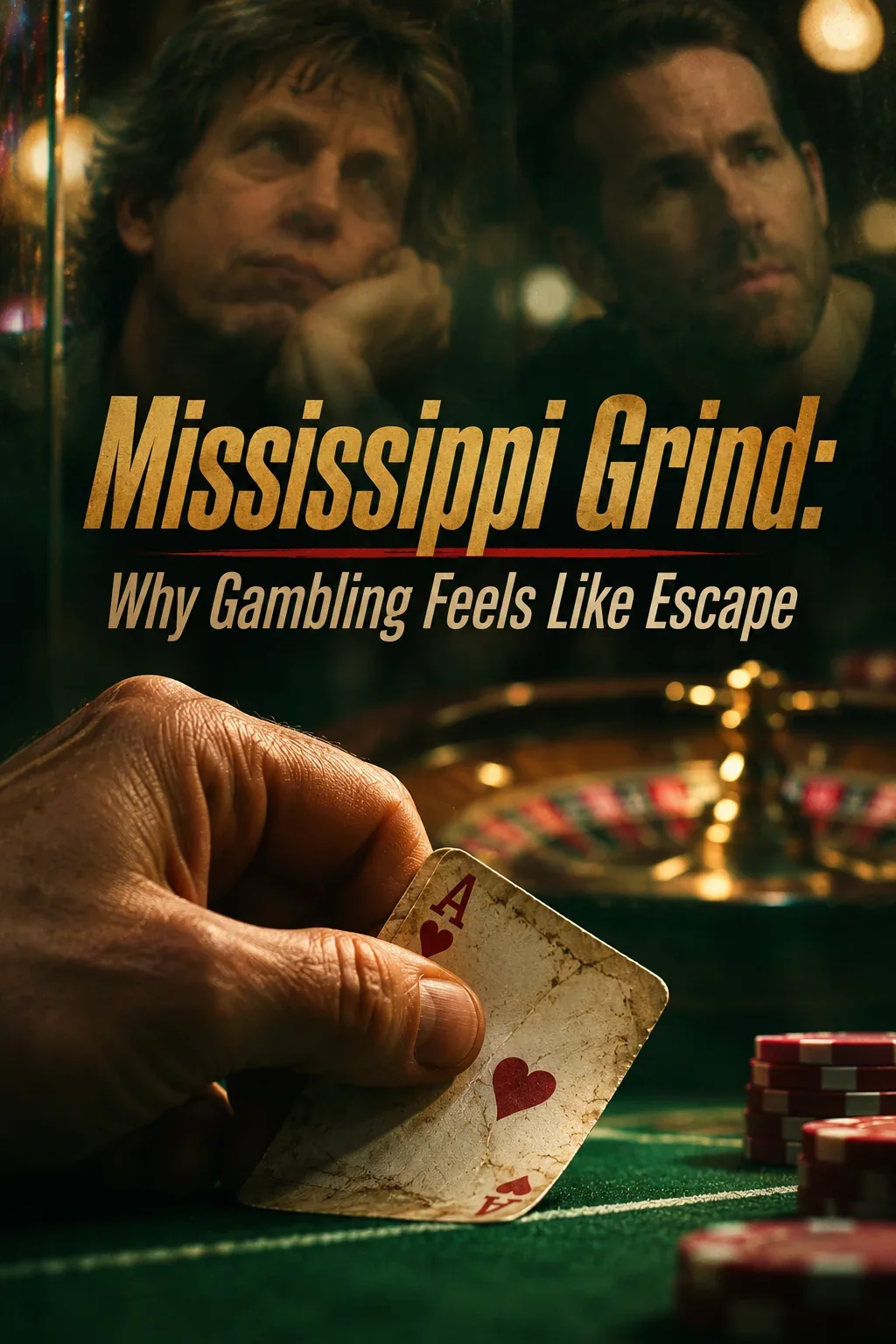
AI-generated editorial illustration; not an official film still.
Confirmation bias
Confirmation bias describes the tendency to notice information that supports existing beliefs while paying less attention to contradictory evidence. Once Gerry identifies Curtis as a source of good fortune, favorable outcomes reinforce that interpretation. Unfavorable experiences can be explained as temporary setbacks rather than reasons to reconsider the original assumption.
This creates a psychological framework in which almost any outcome can support continued gambling. A similar relationship between superstition and gambling appears in Uncut Gems, where Kevin Garnett associates his athletic performance with a rare gemstone.
The gambler's fallacy
The gambler's fallacy involves believing that previous independent outcomes make a particular future outcome more likely. Someone may believe that repeated losses mean a favorable result is now overdue. Gerry's determination to reverse his circumstances reflects the emotional appeal of this kind of reasoning.
The longer his financial problems persist, the more attractive the possibility of a dramatic reversal becomes. However, previous losses do not create an obligation for future random events to produce compensating rewards.
The symbolism of rainbows
Rainbows appear as recurring visual motifs throughout the film. They suggest hope, good fortune, and the possibility of discovering something valuable beyond immediate circumstances. For Gerry, such imagery reflects a broader tendency to search for meaning in coincidences and unexpected events. The directors leave room for interpretation rather than establishing that luck operates as a supernatural force within the story.
Gerry and Curtis: two different forms of escape
Ben Mendelsohn's performance emphasizes Gerry's exhaustion, vulnerability, and difficulty maintaining control over his behavior. During the journey, an encounter with his former wife Dorothy reveals how deeply his behavior has damaged their relationship. His inability to respect financial boundaries demonstrates that his desire to recover money can override commitments to other people.
Curtis initially appears more emotionally resilient. His charm allows him to develop connections quickly, and his willingness to travel creates an impression of independence. Nevertheless, his reluctance to establish permanent relationships raises questions about the nature of that independence. His relationship with Simone, portrayed by Sienna Miller, introduces the possibility of greater commitment.
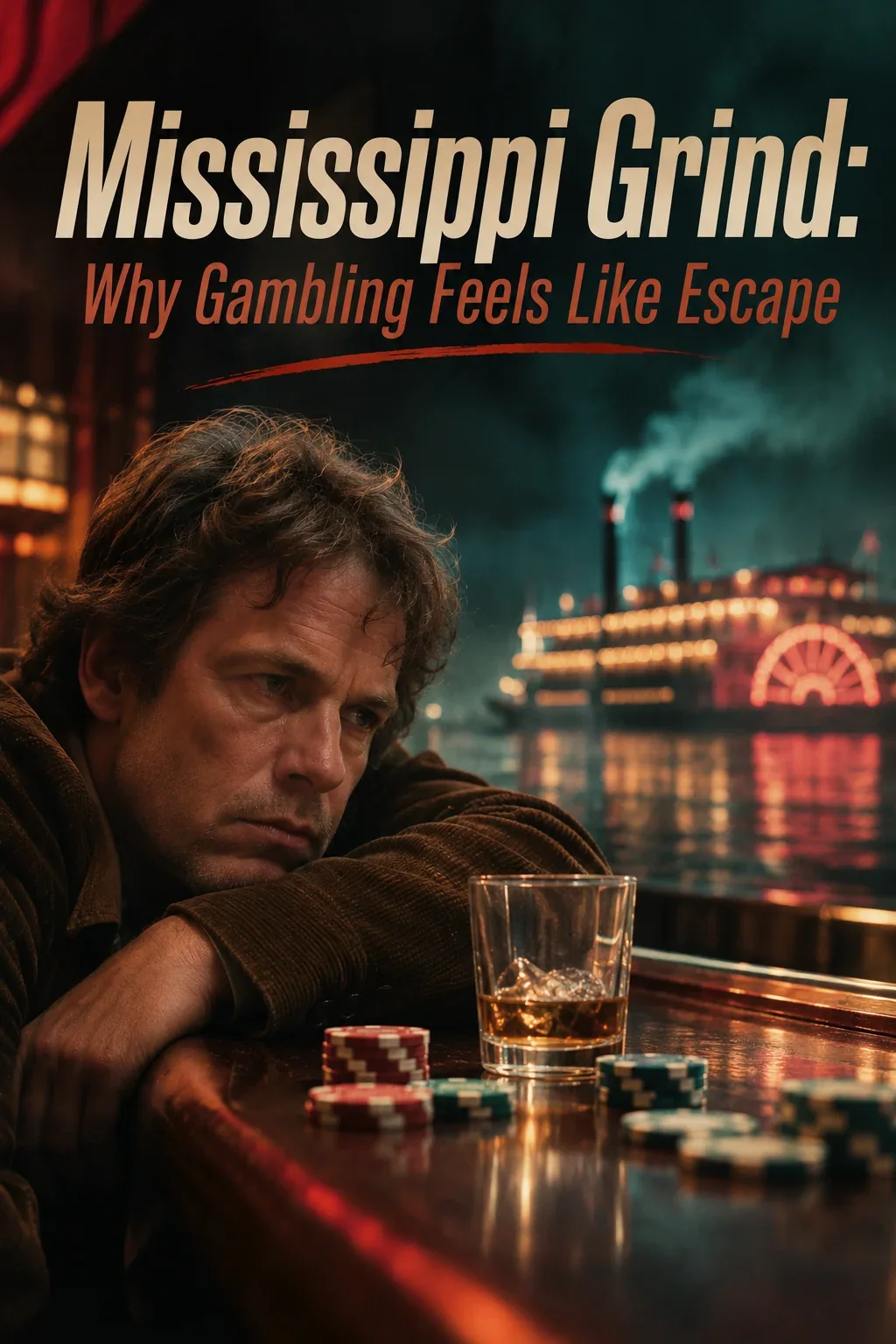
AI-generated editorial illustration; not an official film still.
Curtis's apparent freedom can therefore be interpreted as another form of avoidance. Where Gerry attempts to escape financial and emotional difficulties through gambling, Curtis may be attempting to escape the responsibilities associated with remaining in one place. The movie does not require viewers to accept either interpretation as a definitive diagnosis.
Gambling addiction in Mississippi Grind
Loss chasing describes continued gambling motivated by the desire to recover previous losses. Gerry's debts make additional financial risks appear increasingly attractive, particularly when he believes a major victory could resolve several problems simultaneously. This reasoning can produce a cycle in which previous losses become the justification for further exposure. The movie presents financial desperation as both a consequence of gambling and a motivation for continuing it.
Negative reinforcement occurs when a behavior becomes more frequent because it temporarily removes or reduces an unpleasant experience. In Gerry's case, gambling can temporarily displace feelings of anxiety, regret, loneliness, and financial pressure. Even when the activity produces long-term difficulties, its immediate emotional effects may encourage repetition. For another examination of emotional avoidance, see The Gambler.
Mississippi Grind ending explained
The final stages of the journey bring Gerry and Curtis to Louisiana, where their financial circumstances deteriorate further. They sell Gerry's car and experience another disappointing result at a racetrack. However, the film takes an unexpected direction when the characters reunite and experience an extraordinary winning sequence in a casino. Their financial position changes dramatically, despite the destructive decisions that have characterized much of their journey.
Throughout the movie, Gerry behaves as though one major victory could transform his life. The ending appears to fulfill that expectation. However, financial relief and recovery from harmful gambling behavior are fundamentally different outcomes. A substantial win may temporarily resolve debts without addressing emotional avoidance, compulsive behavior, or damaged relationships. The movie does not provide sufficient evidence to establish that Gerry has permanently changed. Its optimistic financial conclusion remains psychologically ambiguous.
The characters eventually separate, leaving the future of their relationship uncertain. Their time together has provided companionship and emotional support, but it has also involved financial risk, deception, and disappointment. Their separation suggests that personal development requires more than finding someone who shares the same destructive habits. A comparable narrative contradiction appears in Win It All.
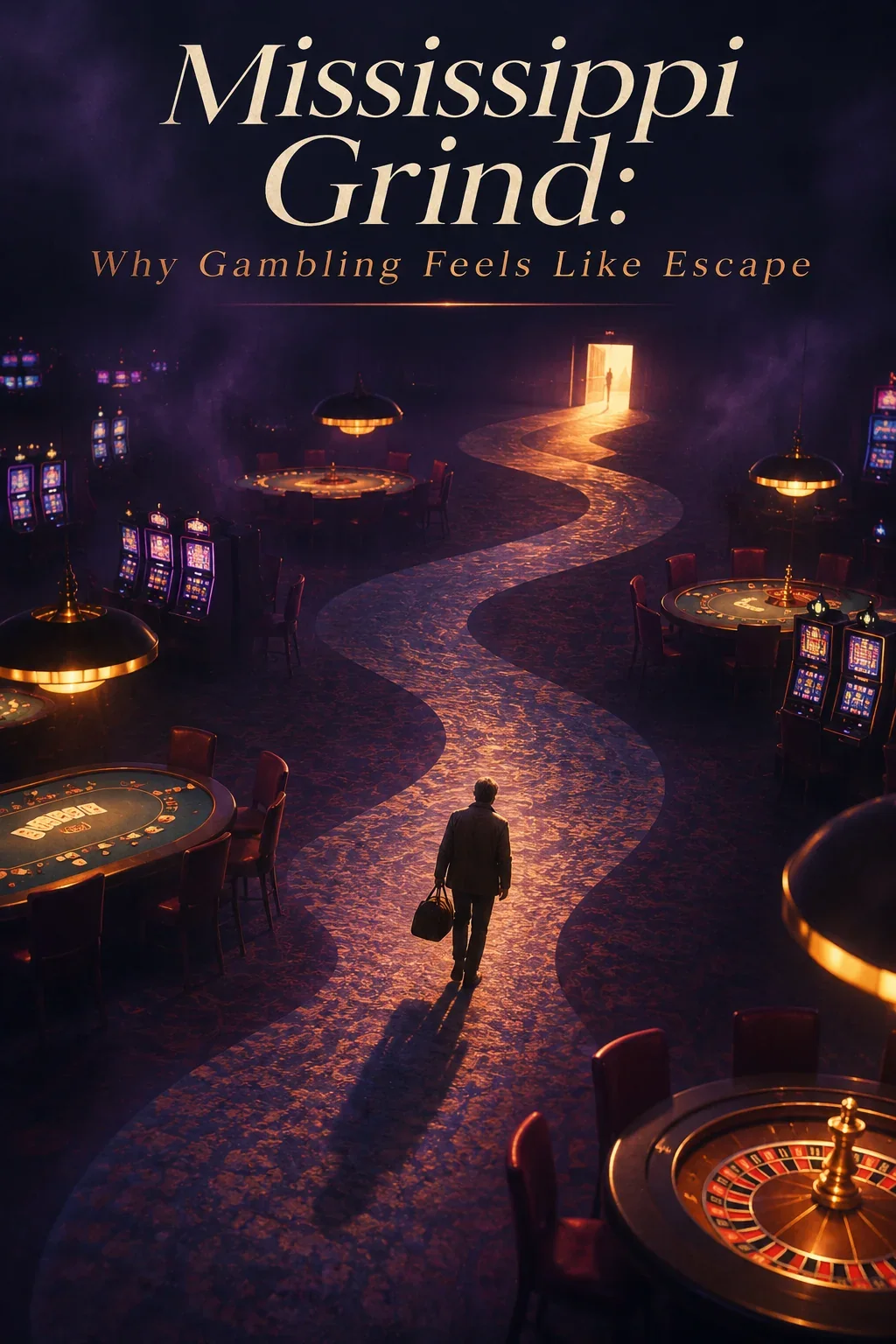
AI-generated editorial illustration; not an official film still.
Frequently asked questions
Is Mississippi Grind based on a true story? No. It is a fictional narrative drawing on recognizable elements of American gambling culture.
Is it about gambling addiction? Yes. Gerry's financial difficulties, damaged relationships, loss chasing and emotional dependence are central.
Is Curtis really a lucky charm? The film explores Gerry's belief without establishing a supernatural connection between his presence and outcomes.
Is the ending happy or tragic? Financially optimistic, but emotionally uncertain. It does not establish lasting recovery.
Final thoughts
Mississippi Grind offers a thoughtful examination of gambling as emotional escape. Through Gerry and Curtis, Anna Boden and Ryan Fleck explore the relationship between hope, friendship, superstition, and financial uncertainty. Genuine escape requires more than changing one's location or experiencing a favorable outcome. It requires addressing the problems that made escaping seem necessary.