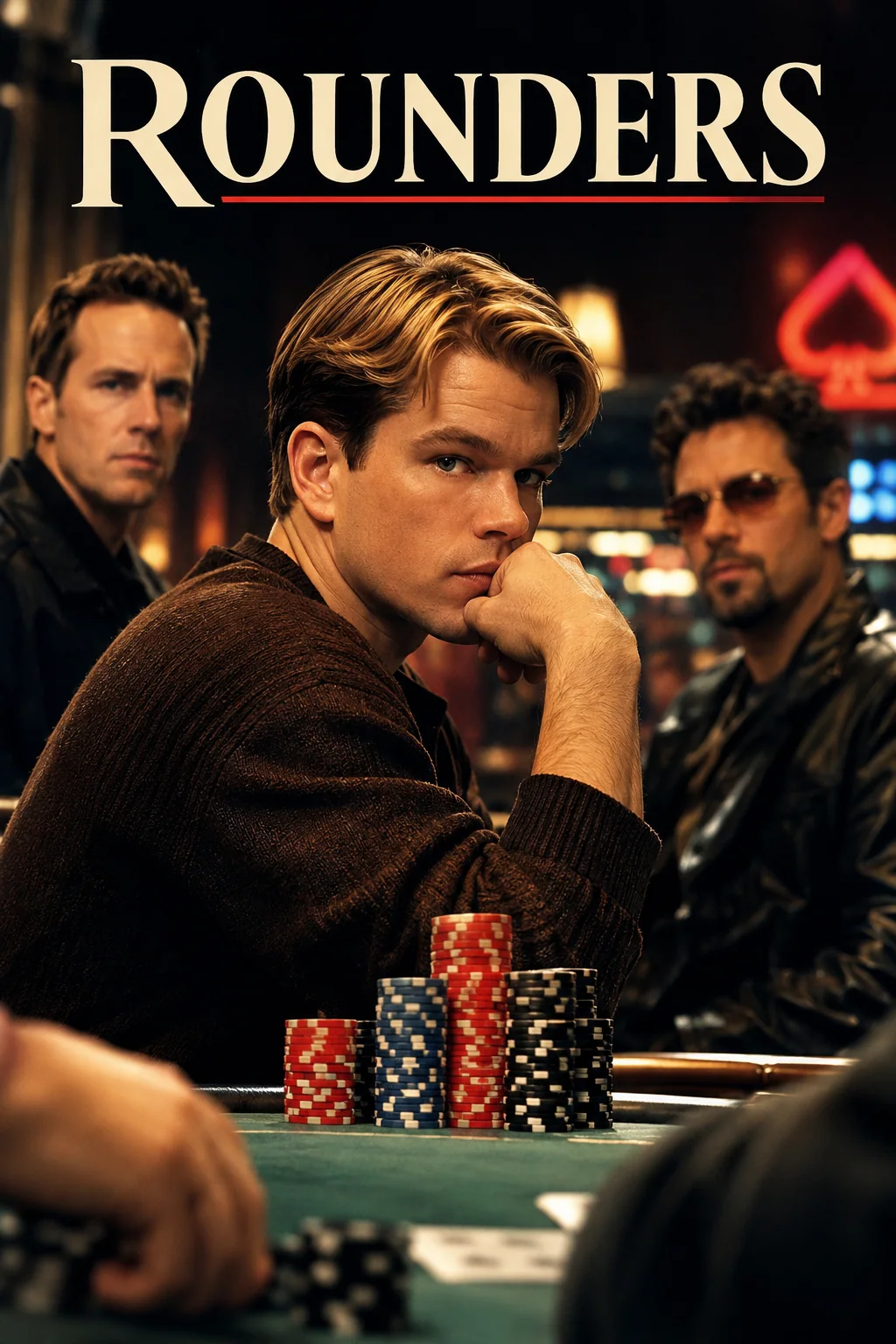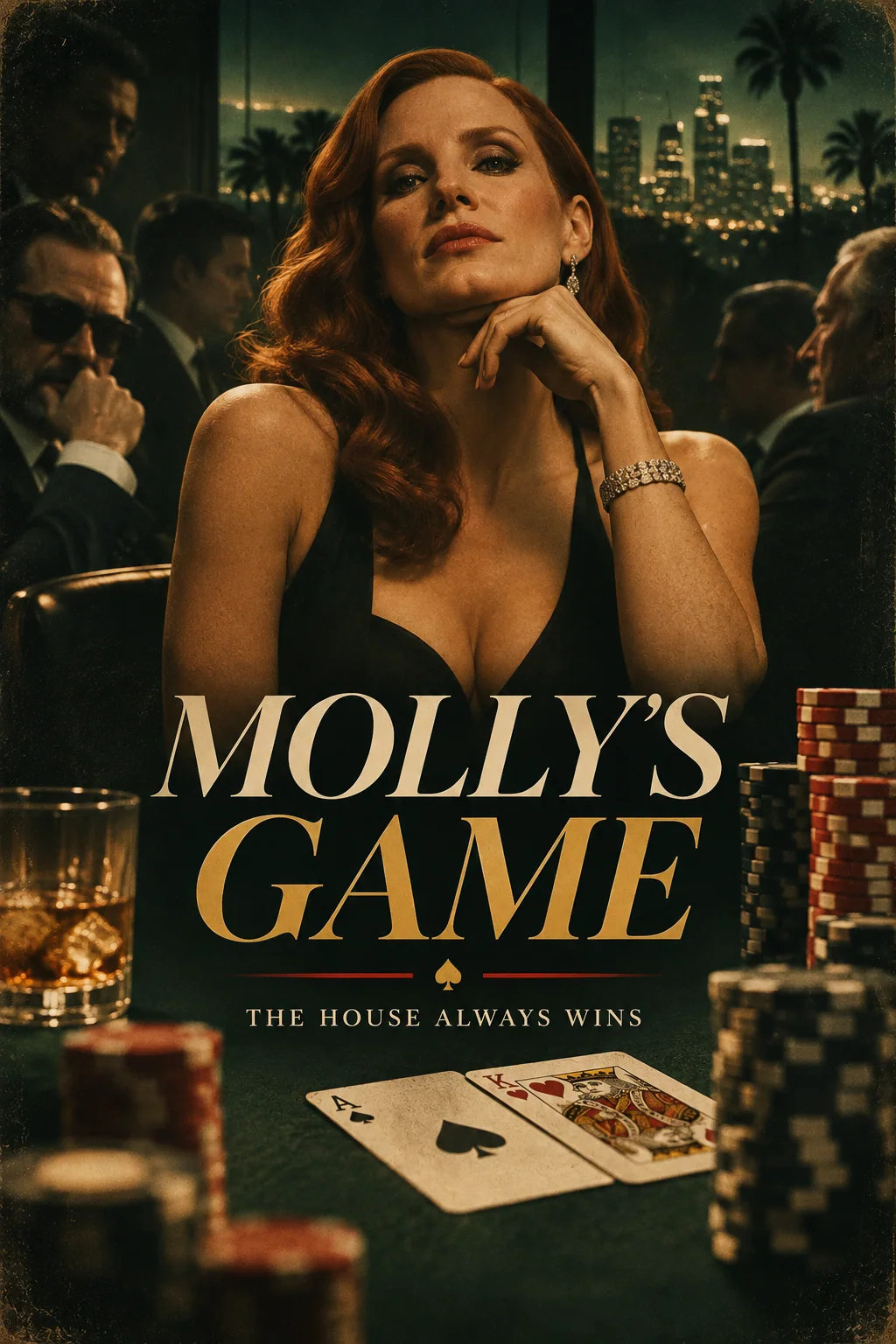
Aaron Sorkin's Molly's Game (2017) tells the story of Molly Bloom, a former competitive skier who became associated with exclusive private poker games in Los Angeles and New York. Jessica Chastain portrays Bloom, Idris Elba plays her fictionalized lawyer Charlie Jaffey, and Kevin Costner plays her father. The film adapts Bloom's memoir while combining courtroom drama, rapid narration and scenes from the gambling business.
The distinction between the historical Molly Bloom and the cinematic character matters. The movie is inspired by real events, but its dialogue, composite personalities and emotional confrontations are not a documentary transcript. This guide examines what is established about the poker operation and its legal consequences, while separating the film's dramatic interpretation from the public record. Spoilers follow.
Real Events Versus Film
From competitive skiing to Hollywood's private games
Bloom's background as a competitive skier is an important part of both her memoir and the movie. Sorkin uses the skiing sequence to establish a personality shaped by discipline, ambition and the experience of failure. Her subsequent move into the world of high-stakes private poker introduces a new environment where those qualities can be applied to organizational work.
The business initially develops through social connections. Bloom enters a world where wealthy guests, celebrities and professional relationships intersect. Her role involves coordinating an event rather than competing for the pot herself. This distinction sets the film apart from gambling dramas in which the protagonist is primarily a player.
The movie repeatedly presents the private game as a social institution. Invitations, discretion and reputation are part of its appeal. The participants are not merely paying for the opportunity to play cards; they are entering an exclusive environment that reflects their social and financial status. Bloom's ability to coordinate these relationships becomes a central source of her authority.
Why the poker empire was a business
The film highlights the work behind a private game: organizing a venue, communicating with players, maintaining records and dealing with the consequences of large financial obligations. It also raises questions about the boundaries between hosting a social gathering and operating a gambling business.

AI-generated editorial illustration; not an official film still.
The distinction is important because legal requirements vary by jurisdiction and by the circumstances of an operation. An apparently exclusive event is not necessarily lawful or adequately protected. The historical case involved specific conduct under federal law, not a universal judgment about every private poker game.
The movie shows how professional ambition can become tied to the continued growth of an organization. As Bloom's games become more prominent, she must manage increasingly complex relationships. The financial stakes make trust and discretion more consequential, while her dependence on the business creates additional pressure.
For a fictional contrast, see Runner Runner, which shifts attention from private games to an offshore digital operation.
The Players and Legal Case
Celebrity participants and the meaning of Player X
Sorkin's screenplay includes a character known as Player X, portrayed by Michael Cera. He represents the influence that a wealthy, recognizable participant can possess within an exclusive game. His conflict with Bloom dramatizes the fragility of a business dependent on a small network of influential customers.
The character is not a basis for confidently identifying an individual in every depicted event. Bloom's memoir and public reporting have discussed recognizable names, but the film deliberately uses a fictionalized character. Private conversations and specific behavior shown on screen should not be automatically attributed to real individuals.
This distinction is particularly important when a movie portrays criminal activity, dishonesty or personal misconduct. A dramatic character may combine narrative functions that do not correspond precisely to the historical record.
What the federal case established
Bloom was among the people charged in a federal investigation in 2013 concerning an illegal gambling operation and related activities. She subsequently pleaded guilty to a gambling-related offense and was sentenced in 2014 to probation, community service and financial penalties. The criminal case provides a documented foundation for the film's final legal conflict.
The screenplay condenses the legal process through Charlie Jaffey, a fictional lawyer whose relationship with Bloom gives the story an additional moral dimension. His conversations with her are designed to make legal choices and questions of responsibility emotionally accessible.
The public record should remain separate from the movie's more personal interpretations. A conviction establishes particular legal conduct; it does not establish that every private scene depicted by a filmmaker occurred. Nor does it mean that all participants in Bloom's games were involved in the wider criminal conduct described in the prosecution.
Gambling psychology and social power
Status, reputation and perceived authority
The private poker environment provides a vivid illustration of how social status can influence behavior. Wealth, familiarity and prestige may create an impression of authority. They cannot independently establish that a game is fair, a business is financially secure or a person is trustworthy.
Bloom's role also demonstrates a different relationship to gambling-related risk. She is not primarily motivated by the uncertain results of her own hands. Instead, her financial and professional future becomes connected to the continuation of the games. The movie therefore explores the way gambling-related incentives can affect organizers as well as participants.
Escalation of commitment
As the business grows, Bloom acquires more responsibilities and develops an identity closely connected to her professional achievements. Leaving the environment becomes more difficult because she has invested considerable time, effort and personal reputation.
Escalation of commitment describes the tendency to persist with an objective despite growing evidence that it may be harmful. Sorkin uses the increasing complexity of the operation to dramatize how previous achievements can create pressure to continue. The danger is not simply the original decision to enter the industry, but the gradual accumulation of compromises and obligations.
The ending and its cinematic meaning
The court sequence provides the film with its most direct statement about accountability. Bloom accepts responsibility for her conduct while attempting to protect information entrusted to her. The conclusion shifts the story's attention away from the wealthy players and toward her own future.
Sorkin also connects the ending to her difficult relationship with her father. The personal reconciliation gives the legal drama an emotional resolution, but it belongs to the movie's artistic interpretation. The film's account of ambition, secrecy and family expectations should not be treated as a verified psychological diagnosis of the historical person.
The relationship between real gambling controversies and dramatization is also explored in Inside Game and Winning Streak.
Frequently asked questions
Is Molly's Game a true story? Yes. It adapts Molly Bloom's memoir and draws on her documented legal case, with fictionalized elements.
Did Molly Bloom play professional poker? Her public reputation and the film primarily concern organizing private games rather than competing as a professional player.
Is Charlie Jaffey a documentary portrayal of her lawyer? He is a fictionalized character created for the screenplay.
Was everyone at her games accused of a crime? No. Attendance at a private game should not be conflated with the specific criminal charges established in the case.
Final thoughts
Molly's Game stands out because it treats gambling as a business, a social environment and a source of professional identity. Its most meaningful questions concern trust, responsibility and the consequences of building an enterprise around financial relationships that may carry hidden risks. The real legal record gives the film its historical significance; the screenplay gives that record a distinctive emotional interpretation.